
Hauesta on paljon tietoutta, mutta vain harvoin Suomeksi.
Olemme koostaneet alle haukifaktoja suomeksi.
Voit myös vinkata meille uuden faktan tai kysyä, mitä hauesta haluat tietää!
Haukifaktoja
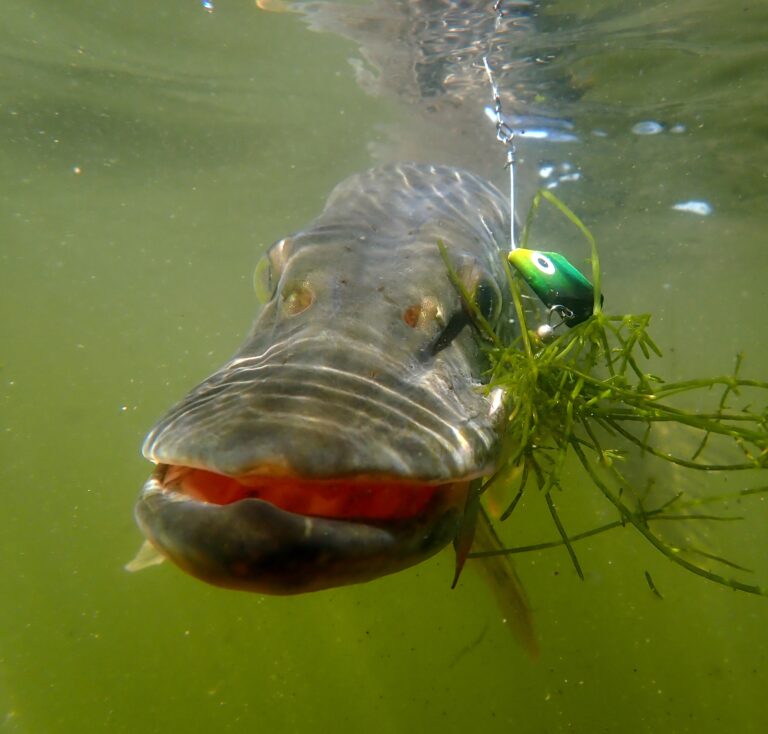

Kannibalismi:
Pienten haukien on todettu voivan syödä lajitovereitaan, jotka ovat jopa 80 % niiden omasta ruumiinpituudesta.
Lähde: 10
Lämpötila:
Vaikutus hedelmöittymiseen / kuoriutumiseen:
3°C = 44,6% / 18,26%;
6°C = 71,3% / 56,2%;
10°C = 65,6% / 65,5%
Lähde: 2
Lämpötila:
Vaikutus haudonta-aikaan (5 / 95 % kuoriutunut):
3°C = 38 / 46 päivää = 120 / 144 päiväastetta;
18°C = 2,5 / 3,4 päivää = 45 / 61 päiväastetta.
Lähde: 2
Haudonta-aika:
Hauen mädillä on n. 120 päiväastetta.
Lähde: 8
Lämpötila:
12°C = optimi hauen mätimunien ja larvavaiheiden selviytymiselle ja kehitykselle.
Lähde: 3
Aiemmin keväällä kudetut mätimunat kuoriutuvat paremmalla prosentilla ja sietävät paremmin nälkiintymistä.
Myöhemmin keväällä kudetusta mädistä tulee kuitenkin suurempia ja nopeakasvuisempia poikasia. (Tästä on etua JOS ravintoa on runsaasti ja kasvukausi lyhyt).
Näissä tutkimuksissa isot hauet ovat kuteneet myöhemmin.
Ravinto
Ulkoisen ravinnonoton ensimmäiset kaksi viikkoa hauen suun koko rajoittaa ravinnon lähinnä eläinplanktoniin (lähde 6).
n. 28 mm kokoisena hauenpoikaset alkavat syödä myös muita kalanpoikasia (lähde 3).
Fekunditeetti:
Naarashauessa on 17,6 – 19,1 mätimunaa jokaista emokalan painogrammaa kohti (eli kilon kalassa 17600 – 19100 mätimunaa).
Lähde: 9
Fekunditeetti:
45 cm hauki ≈ 25 000 mätimunaa.
90 cm hauki ≈ 125 000 mätimunaa.
Kudun kesto:
Naaras kutee n. 2 – 5 päivän ajan.
Lähde: 8
Isompi hauki = isompi mätimuna:
40 cm hauki → 2,1 mm mätimuna.
80 cm hauki → 2,4 mm mätimuna.
Mätimunan koko ei kuitenkaan kerro sen ravintosisällöstä tai kuoriutuvan ruskuaispussipoikasen koosta.
Mätimunan kuivamassa on paljon parempi kuvaamaan mätimunan laatua ja ruskuaispussipoikasen kokoa.
Lähde: 7
pH
Hauen pienpoikasten (larval stages) kasvu hidastuu selvästi pH:n laskiessa tasoon 5,5 ja kehitys häiriintyy lukemassa 5 tai alle.
Mätimunat ovat herkempiä kuin pienpoikaset.
Lähde: 1
pH
Aikuiset hauet voivat selviytyä alimmillaan pH:ssa 4 – 4,4 ja lisääntyä alimmillaan pH:ssa 4,4 – 4,9.
Lähde: 1
Rannan syvyysvyöhykkeiden haukituotanto:
Tulvaniityiltä haukituotanto on noin 15 kertainen verrattuna rannan
matalan vesikasvillisuuden alueeseen. Syvemmällä rantavyöhykkeessä
haukituotanto on liki nolla. (Pohjois-Amerikan jokiekosysteemissä tutkittua).
Lähde: 4
Vesivessa:
Hauet viettävät suurimman osan ajastaan saalistamisalueella, mutta jos ne ovat syöneet särkikaloja, ne pääsääntöisesti ulostavat hieman sivummalla.
Hauen ulosteissa on saaliiksi joutuneista särkikaloista erittynyttä ”kauhuferomonia”, mikä karkottaa muita särkikaloja.
Ainetta erittyy hauesta veteen myös ulostamatta, mutta etäinen vessapaikka kuitenkin vähentää kauhuaineen pitoisuutta saalistuspaikalla eikä niin helposti karkota saalista.
Lähde: 14
Näkyvyys:
Sameuden tai humuksen heikentämä näkyvyys vedessä vähentää haukien saalistushyökkäyksiä.
Lähde: 15
Näkyvyys
Heikentynyt näkyvyys vedessä vaikeuttaa saaliskalan etäisyyden ja kulman hahmottamista saalistushyökkäyksessä ja täten heikentää hauen hyökkäyksen tarkkuutta.
Jos taas näkyvyys on niin huono, että näköyhteys saaliiseen syntyy vasta iskuetäisyyden sisällä, voi hauki saada tästä suhteellisesti etua ja iskun onnistumisprosentti kasvaa.
Lähde: 15
Pelottavat isomukset:
Pienet hauet pitävät mieluusti etäisyyttä isompiin lajikumppaneihinsa. Missä haukia on paljon, tämä johtaa laikuittaiseen kokojakautumiseen – paikoin on runsaasti pienehköjä haukia ja sitten on alueita, joissa haukia on harvemmassa, mutta ne ovat kookkaampia.
Lähde: 16
Pienisuiset ulapalla:
Haukiyksilöiden välillä on eroa suun suhteellisessa koossa. Pienisuisten yksilöiden on Ruotsissa todettu viettävän enemmän aikaa ulapalla kesällä ja alkusyksystä, kun taas suurisuisemmat yksilöt viihtyvät lähempänä rannikkoa.
(Rannikon tuntumassa on korkeampiruumiisia saaliskaloja).
Lähde: 18
Hylkeet ja merimetsot:
Ruotsin saaristossa hylkeiden ja merimetsojen yhteensä on arvioitu saalistavan 5-18 kertaisesti enemmän haukia ihmisperäiseen kalastuskuolleisuuteen nähden. Hylkeet moninkertaisesti enemmän kuin merimetsot.
Lähde: 17
(Suomessa haukien vapautusprosentti kalastuksessa on pienempi, joten oletettavasti kalastuksen merkitys haukien poistajana on meidän saaristossamme suurempi.)
Minkä haukifaktan haluaisit tietää?
Kerro meille.
Lähteet
Lähdeluettelon pilkkusäännöt eivät ole päätyötämme, mutta haluamme lähteet kuitenkin kertoa. Usein merkkaamme yhden lähteen, vaikka aiheesta olisi useitakin tutkimuksia olemassa. Osa lähteistä voi olla myös tutkimuksia referoivista kirjoista.
1: Christian Skov & P. Anders Nilsson, Biology and Ecology of Pike, 2018 by Taylor and Fancis Group LLC (401 s.)
2: Bondarenko V., Drozd B. & Policar T., Effect of water temperature on egg incubation time and quality of newly hatched larvae of northern pike (Esox lucius L., 1758),Journal of Applied Ichthyology, Volume 31, November 2015, s.45-50.
3: Cooper, J. E. (2000)., Comparative development and ecology of northern pike Esox lucius and muskellunge E. masquinongy eggs and larvae in the upper St. Lawrence River and the implications of changes in historical spawning habitat., Doctoral dissertation. State University of New York, College of Environmental Science and Forestry, Syracuse, New York.
4: Farrel J. M., Mead J.V. & Murry B.A. (2006) Protracted spawning of St Lawrence River northern pike (Esox lucius): simulated effects on survival, growth and production, Ecology of Freshwater Fish, Vol 15, Issue 2, s.169-179.
5: Trabelsi A., Gardeur J., Ayadi H. & Fontaine P. Effect of spawning time on egg quality, larval morphometrics and survival of Northern pike Esox lucius International Journal of Ichthyology, January 2015.
6: Devries, D. R., Stein, R. A., & Bremigan, M. T. (1998), Prey selection by larval fishes as influenced by available zooplankton and gape limitation.,Transactions of the American Fisheries Society, 127, 1040–1050.
7: Murry, B. A., Farrell, J. M., Schulz, K. L., & Teece, M. A. (2008)., The effect of egg size and nutrient content on larval performance: implications to protracted spawning in northern pike (Esox lucius Linnaeus)., Hydrobiologia, 601(1), 71–82.
8: Nilsson J. (2006)., Predation of northern pike (Esox lucius L.) eggs: a possible cause of regionally poor recruitment in the Baltic Sea., Hydrobiologia (2006) 553: 161–169
9: Wright R. M. & Shoesmith E., The reproductive success of pike, Esox lucius: aspects of fecundity, egg density and survival., Journal of Fish Biology 33 (4): 623-636
10: Bry C., Basset E., Rognon X. & Bonamy F. (1992)., Analysis of sibling cannibalism among pike, Esox Lucius, juveniles reared under semi-natural conditions., Env. Biol. Fish. 35: 75-84
11: Raat, A.J.P. (1988)., Synopsis of the biologigal data on the northern pike, Esox lucius Linnaeus, 1758., FAO Fisheries Synopsis: No. 30, Rev. 2, 178 p.
12: Grimm M.P. & Klinge M. (1996)., Pike and some aspects of its dependence on vegetation., pp 125-156. In: J.F. Craig (ed.). Pike: biology and exploitation. London: Chapman & Hall.
13: Jepsen N., Beck S., Skov C. & Koed A. (2001)., Behavior of pike (Esox lucius L.) >50 cm in a turbid reservoir and in a clearwater lake., Ecol. Freshw. Fish. 10: 26-34.
14: Brown G., Chivers D. & Smith R.J.F. (2005), Effects of diet on localized defecation by Northern Pike, Esox lucius, Journal of Chemical Ecology, Vol. 22, p.467-475.
15: Jönsson M., Ranåker L, Nilsson P.A. & Brönmark C. (2013), Foraging efficiency and prey selectivity in a visual predator: differential effects of turbid and humic water., Canadian Journal of Fisheries and Aquatic Sciences, Vol. 70 (12), p.1685-1690.
16: Nilsson P.A. (2006), Avoid your neighbours: size-determined spatial distribution patterns among northern pike individuals., Oikos, Vol. 113, p.251-258.
17: Bergström Ulf et al., Long-term changes in the abundance of large pike in the northern Baltic Sea – patterns and potential drivers., Symposium on Baltic Pike, 23.11.2021.
18: Henrik Flink, Variation in habitat utilisation of Baltic pike: is it associated to growth rate, reproductive investment, and morphology?, Symposium on Baltic Pike, 23.11.2021.